3 Pathophysiology of APL
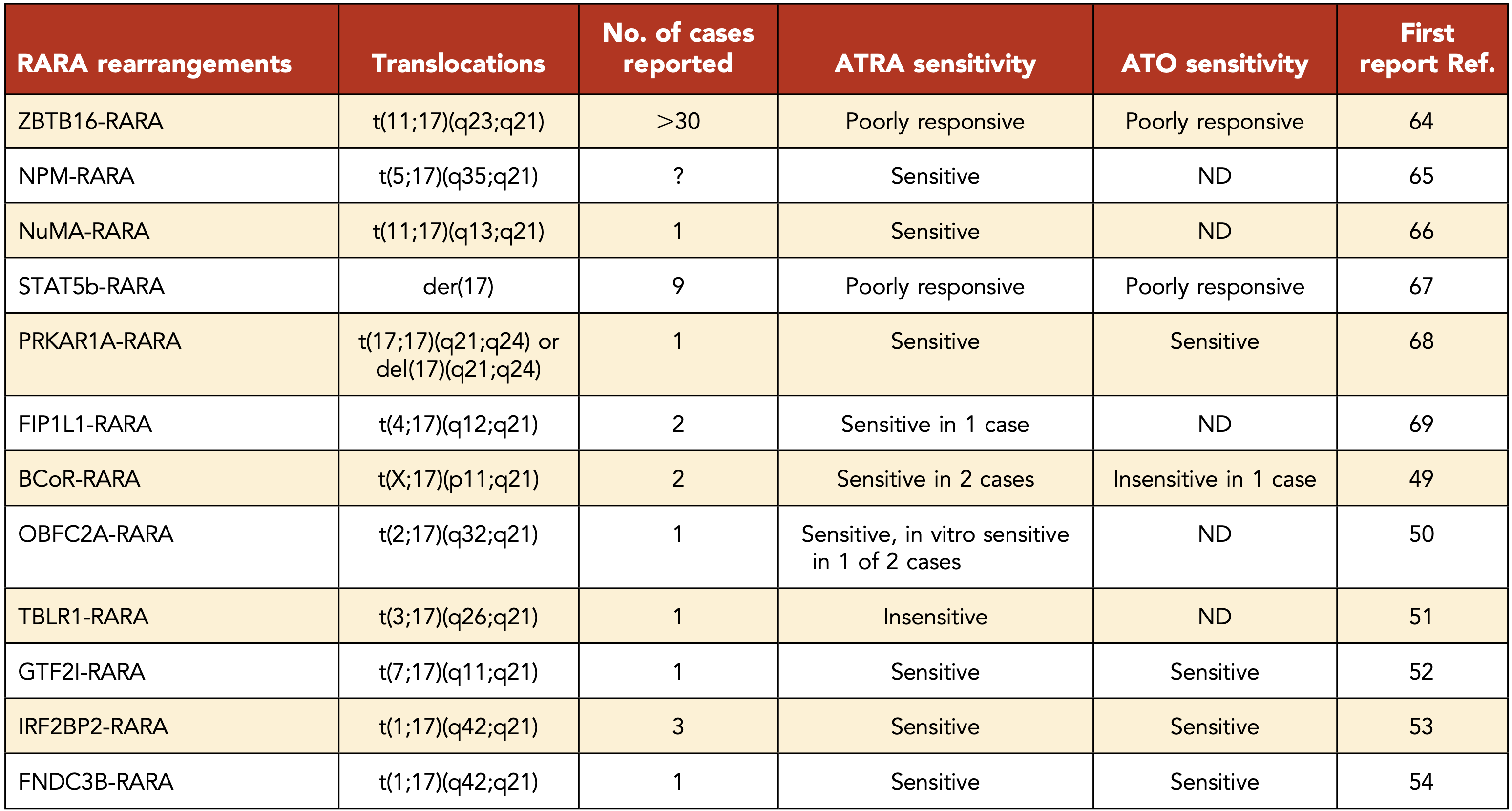
3.1 Variant RARA translocations and sensitivity to ATRA and ATO of the 12 fusion genes involving RARA
3.2 FLT3-ITD/TKD in APL
- ~30-40% of APL
- Leukocytosis, microgranular variant and involvement of the bcr3 breakpoint of PML
- FLT3 ITD mutation is present in 25% of APL patients and is often associated with leukocytosis at presentation and M3v morphology.
- However, unlike other AML sub-types, the
presence of the FLT3 ITD is not an independent predictorof increased risk of relapse in APL with current therapy. - However, the induction mortality may be higher in this subset given the association of FLT3 mutation with leukocytosis and risk of hemorrhagic death.
- FLT3 inhibitors are not included in APL treatment.
3.3 Cryptic or masked t(15:17)
- Cytogenetically cryptic
- PML-RARA transcript detected molecularly (RT-PCR)
3.4 Secondary Cytogentic Abnormlaities
- MSKCC data showing Epstein-Peterson et al. (2022)
- Seen in ~40% of cases
- Gain of chromosome 8 (most common; ~10-15% of cases)
- Complex karyotype is associated with inferior event-free survival in patients who have APL treated with ATO.